“The mind is like water. When it’s turbulent, it’s difficult to see. When it’s calm, everything becomes clear. ” — Mahes Prasad
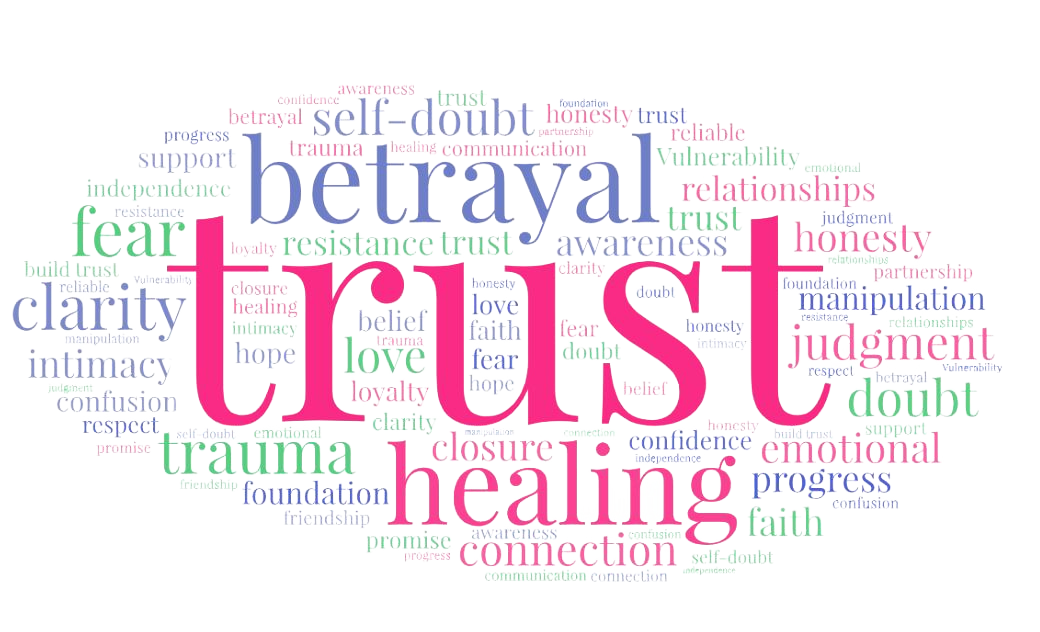
The Struggle to Trust Again
Coming out of an abusive relationship—whether emotional, mental, or physical—leaves deep wounds that don’t simply heal with time. One of the most profound and lasting effects is the complete erosion of trust. But the loss of trust doesn’t just apply to others—it starts within.
Trying to heal and move on is like trying to walk through waist-deep quicksand. Every effort to pull yourself up is met with resistance, dragging you back down. You try to move forward, but the weight of past trauma makes each step exhausting. Just when you think you’re making progress, something or someone destabilizes you. This makes you question if you’ll ever be free from it.
When you’ve been manipulated, gaslit, and broken down for so long, you stop trusting yourself first. You question your own judgment, your perceptions, and your instincts. You wonder if you misread the situation, if you imagined the good parts, if you overreacted to the bad. If you can’t even trust yourself, how can you possibly trust anyone else?
The Emotional Disconnect
And people just aren’t kind these days. They tell you one thing one day and something entirely different the next. The “I love yous” turn into “feelings change.” The “most important friendship/relationship” suddenly becomes, “Well, my very close friends know that I’m like this,” when you thought you were one of them. You pour your heart out. You hope for clarity. Instead, you receive a cold, detached “It’s not about you, it’s just where my mind is at.” But that doesn’t help when all you want is to understand. You want to heal. You want to be better so you can move forward whole instead of in pieces.
And the damage doesn’t stop when the relationship does. You tell someone where your mind is. You express how broken you feel. You share how much trust has already been shattered. Yet, they continue to be intimate with you. The wounds deepen. It feels like another betrayal layered on top of the first. The hope that maybe this time will be different is crushed under the weight of the same patterns repeating themselves.
Rebuilding trust—especially in yourself—is a brutal, uphill battle. Each small step forward is progress. But until that happens, the ability to trust others remains out of reach. It’s not just about learning to believe in others again—it’s about first learning to believe in yourself. Each moment of self-trust regained is a victory. I know I have to accept the imperfections, the stumbles, the setbacks. I know I’m striving for progress, not perfection. But right now, it’s hard. Right now, it feels impossible. Because trust, once broken over and over again, feels like something I’ll never have again—not in others, and certainly not in myself.
The Way They Love—And Why It’s Not Enough
Some people process emotions differently than I do. While I seek deep emotional connection, reassurance, and closure, others may struggle to engage with feelings in the same way. They probably struggle with emotional depth in the way I need it. They’re known for being independent, emotionally detached, and sometimes even unpredictable. They can be incredibly loyal and caring in their own way. However, that way often lacks deep emotional connection. It also lacks the validation that someone like me, who has been through so much, desperately craves.
They intellectualize emotions rather than feeling them fully, which makes conversations about feelings frustrating and one-sided. When I’m drowning in emotions, searching for understanding, their response might be distant, logical, or vague—”It’s not about you, it’s just where my mind is.” They compartmentalize emotions so they don’t have to deal with them in real-time, leaving me stuck in a cycle of needing closure while they have already moved on.
And that’s where the breakdown happens. I need emotional reassurance, raw honesty, and presence, but they often communicate in a way that feels cold and distant. Maybe they don’t mean to hurt me, but their natural instinct to detach and prioritize their own mental space over emotional intensity is exactly why I feel abandoned, confused, and unable to fully trust again.
The Long Road to Healing
I don’t know how to rebuild that trust. Some days, I think I have a plan—I think I know the steps I need to take. But then, out of nowhere, I’m drowning again, flailing in deep water while people stand on the edge, watching, telling me, “It’s not about you, it’s about me.” Of course, therapy helps, but life doesn’t pause for healing. Responsibilities come first—work, family, survival. Before I know it, days or weeks pass. I’ve forgotten to work on everything I was supposed to be working on from therapy.
And having a friend who tells me that our relationship is important to them, yet only ever communicating through text, doesn’t help either. Because through a screen, there’s no body language to read, no tone of voice to decipher sincerity. I can’t tell if they’re being honest. I can’t tell if they truly care. I can’t tell if they’re just saying what they think they should say. And every day we communicate like this, it chips away at me a little more—because I am desperate for closure, for clarity, for something solid to hold onto. But they won’t give it to me. Maybe they can’t give it to me.
Some people move on faster. They don’t get emotionally stuck in the past. They rationalize, compartmentalize, and detach. Meanwhile, I sit with my emotions, letting them wash over me, needing to process them fully before I can move forward. And that’s where the conflict lies—not in bad intentions, but in fundamentally different ways of experiencing emotions and relationships.
Conclusion
It’s messy, painful, and exhausting to heal from deep betrayal and broken trust. Some days, it feels like progress is being made—like I can take another step forward because the weight is lifting. Other days, I feel like I’m drowning again, trying for stability that never comes. But I’m learning that healing isn’t about waiting for others to provide closure, validation, or reassurance. The goal is to trust myself again, little by little, no matter how hard it seems. I have to accept that I may never get the answers I want. I need to understand that people won’t always show up the way I need them to. And I have to figure things out on my own. It’s possible trust won’t be the same as it used to be—but I keep trying. Slowly, I’ll rebuild.
Resources for Help and Support
If you are struggling with the effects of emotional, mental, or physical abuse, know that you are not alone. Healing takes time, and seeking help is a crucial step in your journey. The importance of these resources cannot be overstated; they provide vital support, guidance, and reassurance that you deserve.
These connections with organizations and hotlines provide you a safe space. You can talk about your experiences and access professional help. They also help you find community support. Remember, reaching out is a sign of strength. You deserve to heal with the assistance of those who understand and can help. Below are some essential resources available to you:
- National Domestic Violence Hotline – Call 800-799-7233 or text “START” to 88788 (thehotline.org)
- Crisis Text Line – Text HOME to 741741 for free, 24/7 support
- RAINN (Rape, Abuse & Incest National Network) – Call 800-656-HOPE (rainn.org)
- The Trevor Project (LGBTQ+ support) – Call 866-488-7386 or text “START” to 678678 (thetrevorproject.org)
- BetterHelp – Online therapy resources (betterhelp.com)
- Love is Respect (teen and young adult relationship support) – Call 866-331-9474 or text “LOVEIS” to 22522 (loveisrespect.org)
Healing takes time, and it’s okay to need support. Just remember: you are worthy of trust, love, and understanding—starting with yourself.
Questions for Reflection
- Have you ever experienced a situation like the one described here? How did it affect your ability to trust yourself and others?
- What steps did you take to rebuild your trust after an emotionally challenging experience?
- How have your relationships changed as you worked through your struggles with trust?


 RunningMomof2DE